Enhancing Accountability, Security, and Transparency for Organizational Assets.
Introduction
Assets, be they be hardware, equipment, or inventory, are all vital to the success of any organization. However, many companies face ongoing challenges like asset loss, mismanagement, and lack of accountability. A key reason is the absence of clear responsibility; assets often go unassigned or are managed without proper oversight, creating opportunities for theft, misplacement, or ghost entries.
To effectively address these issues, organizations need a comprehensive system that not only controls access but also designates clear custodianship for each asset, along with a transparent history of movement and approval.
In this blog, we explore how Role-Based Access (RBA) and Asset Custodian Tracking work together to foster accountability, protect valuable resources, and enable senior management to oversee their assets with confidence.
What is Role-Based Access? How Does It Improve Asset Management?
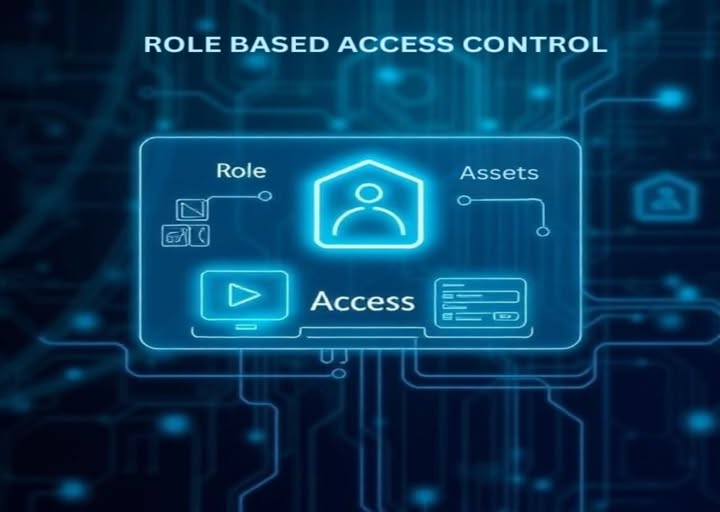
The Role-Based Access (RBA) is a security approach that assigns permissions according to user roles within the organization. Instead of granting blanket access, RBA ensures users can only view or modify assets relevant to their responsibilities. For example, a maintenance technician may access repair logs, while a procurement officer manages purchase approvals, etc.
By implementing RBA, organizations limit access to authorized personnel, reducing the risk of unauthorized actions and strengthening data security.
What is Asset Custodian Tracking? Why It Is Critical?
Asset Custodian Tracking involves assigning each asset to a specific individual or role of the “custodian” and maintaining detailed records of that responsibility. This includes tracking when assets are assigned, transferred, or returned, with approval processes documented for each change.
Establishing clear custodianship creates accountability for every asset, making it straightforward to identify who is responsible for its maintenance, movement, or disposal at any given time.
Connecting Role-Based Access & Custodian Management to Close the Accountability Gap
When RBA and custodianship are integrated, asset management becomes a proactive, transparent process. Here’s how they complement each other:
- Role-specific permissions: RBA ensures only authorized users have access to asset data pertinent to their role.
- Clear custodianship: Assets are assigned to responsible individuals or roles, establishing responsibility.
- Traceability: Every assignment, transfer, or modification is recorded, creating an audit trail.
Tracking Asset Lifecycle, Movement, and Approvals
A robust system captures an asset’s movement throughout the entire lifecycle of the asset with:
- Assignment history: Details who was responsible and when.
- Movement logs: Record where and when assets are transferred.
- Approval workflows: Guarantee that any change in asset status or custodianship is authorized by designated personnel.
This comprehensive tracking enhances transparency, enabling management to swiftly identify discrepancies, prevent ghost entries, and hold custodians accountable.
How FAMS Empowers Senior Management?
Moreover, Fixed Asset Management Software (FAMS) provides organizations with essential features that enable senior management to maintain responsible, secure, and efficient asset management. These capabilities facilitate real-time oversight, accountability, and compliance, helping organizations safeguard resources and uphold operational integrity.
- User and Role Management: FAMS allows organizations to define and organize user accounts based on responsibilities, establishing clear access hierarchies that help manage permissions effectively.
- Permissions Control: The software enables fine-tuning of what each role can view, modify, or approve, ensuring that access is appropriately restricted according to organizational policies.
- Asset Custodian Assignment: Assets can be assigned to specific individuals or roles, with detailed custodianship records to clearly delineate responsibility and accountability for each asset.
- Asset Transfer Capabilities: When assets are reallocated or transferred, FAMS automatically updates custodianship and workflows, maintaining accuracy and accountability throughout the asset lifecycle.
By leveraging these key features, FAMS enables organizations to:
- Monitor assets in real time via dashboards, providing instant visibility into asset custodianship and movement.
- Identify overdue or unverified responsibilities through accountability reports, reinforcing accountability.
- Receive automated alerts about unauthorized access or anomalies, allowing swift corrective actions.
- Simplify compliance with detailed, transparent logs of all activities.
Conclusion
Finally, achieving accountability in asset management is essential for operational efficiency, security, and compliance. The combination of Role-Based Access and Asset Custodian Tracking fills critical gaps by assigning clear responsibilities and providing transparent, traceable records of asset lifecycle activities. When supported by robust systems like FAMS, organizations gain the tools needed to enforce responsibility, prevent asset loss, and maintain trust in their resource management processes. Ultimately, this integrated approach fosters a culture of accountability and integrity across the organization.