

Welcome to the 3rd edition of Kumulsoft Tech Digest!
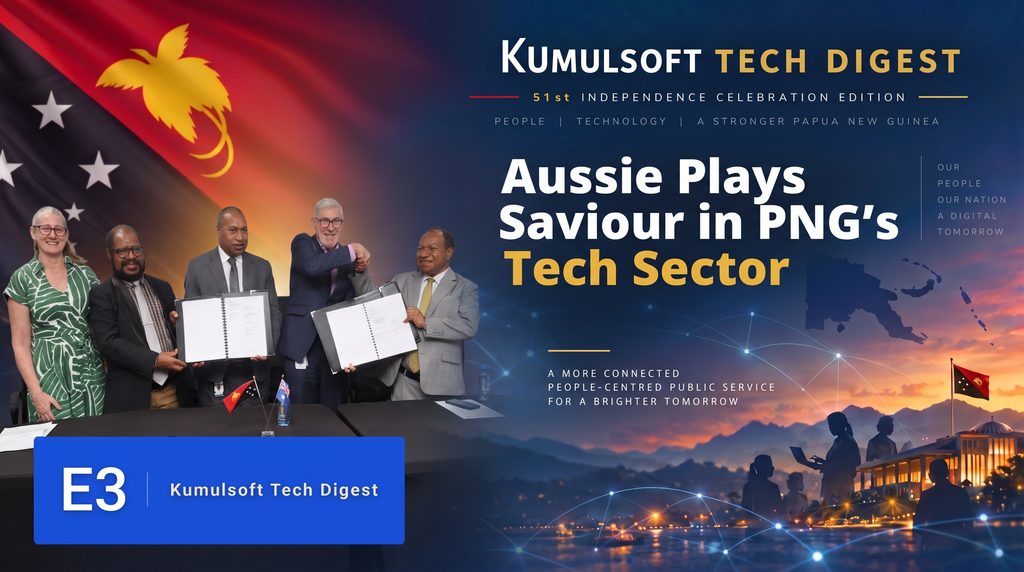
As Australia saves PNG’s tech ambitions with K27 million and Pacific nations expand connectivity and renewable energy, the region faces a defining challenge: how to sustain support for these efforts while harnessing innovation and keeping privacy, security, and AI safeguards in pace.
Australia’s K27.2 million grant to Telikom PNG is the lead story this fortnight, reflecting a broader push to strengthen Papua New Guinea’s technology sector, improve connectivity, and turn local expertise into practical solutions.
However, Australia’s role as a technology-sector savior—like its role in other sectors—needs to be matched by sustained support, particularly as the DICT calls on university students to find practical solutions to the country’s problems.
At the same time, falling wholesale internet costs and proposed digital-ID-linked SIM registration point to expanding access—while also underscoring the importance of protecting personal information.
The same balance between development and safeguards runs through the region: Pacific nations need sustained support to build renewable energy systems, and growing data-center investment is prompting calls for responsible use of power and water.
Meanwhile, escalating cyber risks have intensified demands for stronger protections, from Australia’s proposed AI safety rules to calls by scientists in 32 countries for tighter testing and international cooperation.
Together, these stories show Australia’s continuing role in supporting PNG and Pacific development at a time when the opportunities of new technology are matched by alarming AI risks and a growing need for security, accountability, and local capacity.
Telikom PNG Secures A$6 Million Australian Grant to Upgrade Operations

Papua New Guinea’s state-owned telecommunications provider, Telikom PNG, has secured a K27.2 million (about A$6 million) Australian government grant to improve its operations and strengthen digital services. The agreement was signed at Telikom Rumana in Port Moresby.
- The program will focus on better coordination between Telikom’s business units, more efficient daily operations, and meeting growing demand for its services.
- Funding is being provided through the Australian Infrastructure Financing Facility for the Pacific, with Kumul Consolidated Holdings also involved. Telikom CEO Amos Tepi said discussions took close to two years.
- Initiatives include a national Digital Wallet and E-Wallet platform, an AI Cloud Data Centre, and a Starlink reseller arrangement intended to extend satellite internet to remote communities.
Why it matters: The grant supports Papua New Guinea’s push for stronger state-owned enterprises and better digital connectivity.
The funding will help Telikom improve operations and develop digital services, with the company expected to deliver results and report transparently. [Read the full story.]
DICT Urges University Students to Develop Solutions for Papua New Guinea
Papua New Guinea’s Department of Information and Communications Technology (DICT) is encouraging university students to turn their technology projects into practical solutions for local communities, businesses, and the country.
- DICT Acting Manager for Innovation and Stakeholder Engagement Glenn Bireo said Papua New Guinea needs innovators who understand local challenges and can build solutions suited to the country.
- WPU Team CyberPro Netz placed first in the Higher Education Institution Track at this year’s National Digital ID Hackathon, while Team Stax was the highest-scoring technical team.
- DICT is planning a National Digital Public Infrastructure Centre of Excellence, which could provide selected graduates with training, technical support, and resources to develop prototypes into market-ready products.
Why it matters: Student-led technology projects can help create trusted digital services that address Papua New Guinea’s needs.
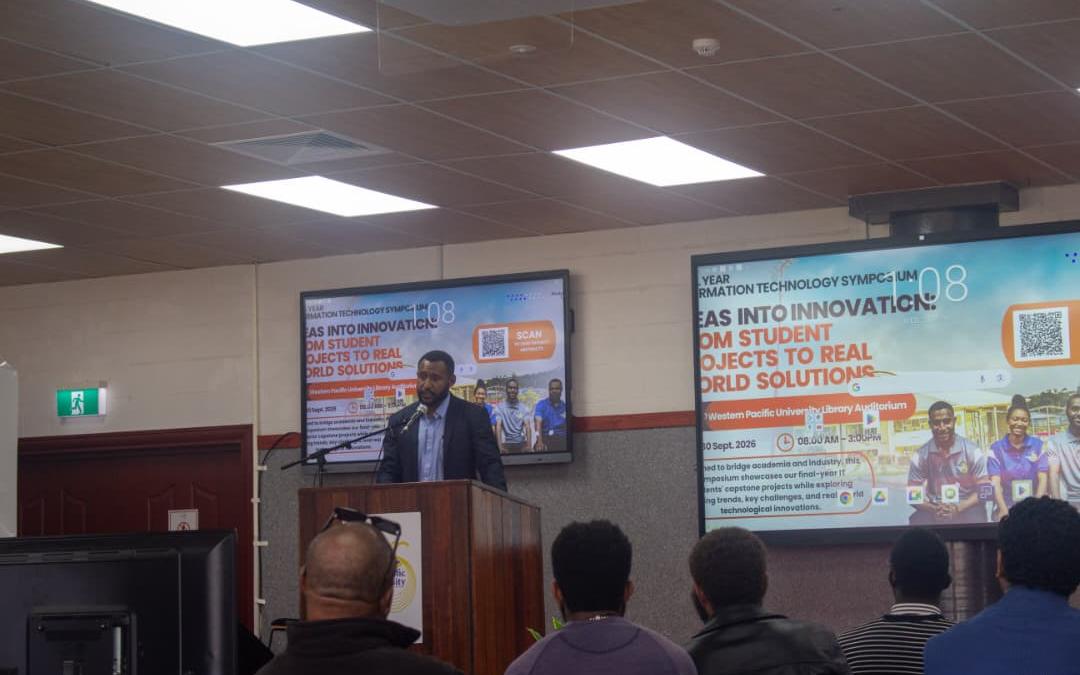
At Western Pacific University’s IT symposium, Bireo urged students to create technology for Papua New Guinea’s needs, while the event showcased projects and programs and encouraged graduates to keep developing their ideas. [Read the full story.]
DICT Reports 95 Percent Drop in Wholesale Internet Costs

DICT Reports 95 Percent Drop in Wholesale Internet Costs
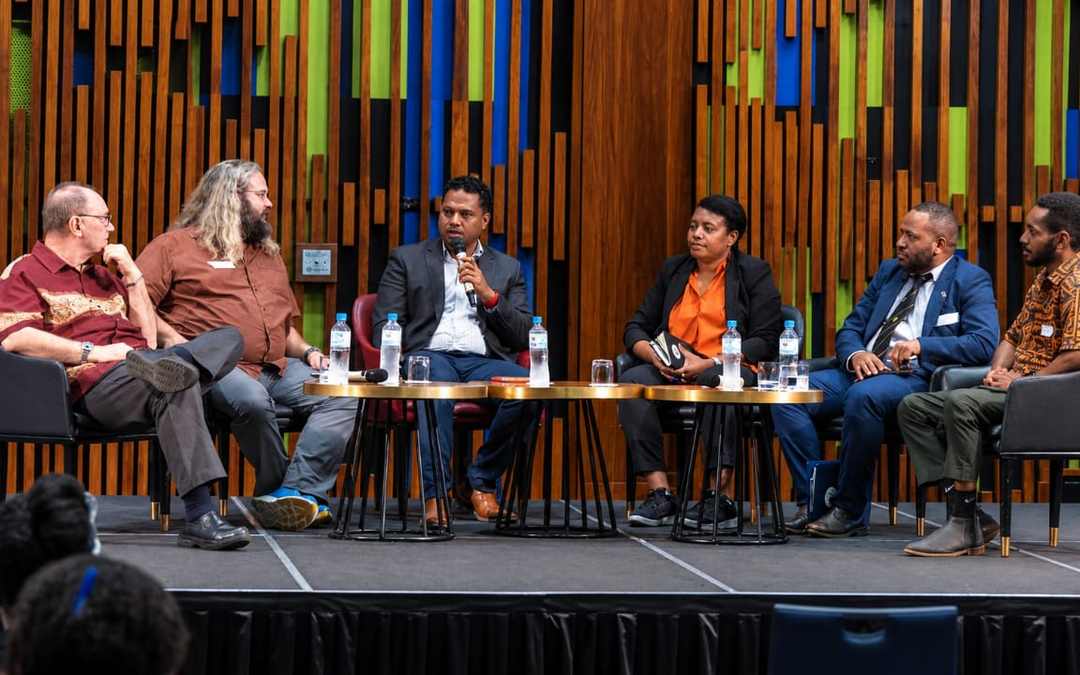
Wholesale internet costs in Papua New Guinea have fallen by as much as 95 percent over the past five years, according to the Department of Information and Communications Technology (DICT). The government is working to reduce costs further and expand digital services, connectivity, and security.
- DICT Secretary Steven Matainaho said the government wants costs to reach a level that supports more affordable internet for users.
- Registered SIM cards have risen from about three million to 6.5 million, with an estimated four million active. The government is also pursuing mobile number portability, national roaming, and tower sharing, while Vodafone’s entry has added another operator.
- Officials highlighted the need for stronger digital literacy, security measures, and more opportunities for young people to develop and test technology projects.
Why it matters: Affordable internet and secure digital systems are essential as more government services move online.
The government is promoting digital services and local innovation, with UPNG supporting student projects like Belden Sakiromo’s criminal-record system through a planned innovation hub. [Read the full story.]
Data Centers in the Asia-Pacific Face New Resource Regulations
Investment in data centers is surging across the Asia-Pacific as demand for artificial intelligence and other digital services grows. But the facilities heavy use of water, electricity, and land is prompting community concern and pushing governments to consider tighter regulation.
- Large data centers can consume millions of liters of water daily and place additional pressure on electricity grids, potentially contributing to higher prices and pollution.
- While the economic benefits may be spread nationally, impacts such as water competition, construction disruption, and pressure on local infrastructure are concentrated near data center sites.
- Australia has proposed a national framework requiring large operators to fund their own power generation and grid connections, alongside mandatory energy-efficiency and water-conservation standards.
Why it matters: Data centers can strain local water and power supplies, making strict rules and fair community protections important.
Australia plans national standards for data centers’ energy and water use, coordinated by the Office of AI, while retaining state approval processes and aiming to legislate by early 2027. [Read the full story].

Australia Plans New Safety Requirements for AI Companies

The Australian government is developing rules that would require AI companies to demonstrate that their systems are being tested and that safeguards can prevent harm. The proposed approach draws on safety regulation in sectors such as banking and aviation.
- Rather than prescribe every action developers must take, the government wants firms to show they can identify and manage risks.
- Assistant Minister Andrew Charlton argues that competition to build more powerful AI can discourage companies from slowing down to address safety concerns.
- The government is finalizing standards expected by the end of the year, with plans to legislate new rules in 2027.
Why it matters: AI can cause serious harm to people who never chose to use it, so safety checks should happen before problems occur.
Australia plans to require AI companies to test for risks and prove their safeguards work, with details still under development. [Read the full story.]
Pacific Nations Need Long-Term Support to Transition to Renewable Energy
Pacific Island nations face some of the world’s highest electricity costs and greatest climate risks, despite contributing little to global emissions. As governments pursue renewable energy, experts say wealthier countries must provide lasting support—not just equipment—to make the transition work.
- Around 80% of the Pacific’s energy supply comes from imported oil products. Some countries spend 10–25% of GDP on fossil fuel imports, while residents pay electricity prices nearly three times the global average.
- Solar and other renewable systems can reduce reliance on imported fuels, lower costs, and provide more reliable electricity, including to remote communities.
- Renewable projects are more likely to succeed when communities help shape and own them, local technicians receive training, and funding covers maintenance and replacement parts.
Why it matters: Renewable energy could help Pacific nations cut fuel costs, strengthen energy security, and support essential services while facing serious climate risks.
Australia’s A$13 million contribution can help, but lasting progress requires locally led projects, training, and long-term maintenance support. [Read the full story.]

DICT Plans to Link SIM Cards to Digital IDs
Papua New Guineans may be required to link their mobile numbers to a government-issued digital identity under proposed measures to reduce fraudulent SIM card use.
- After the plan receives government endorsement, citizens would have 12 months to register for SevisPass and connect their SIM cards to their digital ID.
- Users can already open a MiBank account through the app, and the government is preparing it to support electoral roll checks.
- With citizens’ consent, biometric information could be checked against electoral records to identify duplicate entries. DICT Secretary Steven Matainaho said the department’s work does not include introducing biometric voting.
Why it matters: A single digital identity could make it easier for people to access multiple services without repeating separate identification processes. But connecting more services to SevisPass also makes strong safeguards for personal and biometric information essential.
Matainaho announced the plans at a U.S. Embassy Port Moresby event on digital transformation. The proposals form part of the wider SevisPass rollout, which is being developed for use across financial and government services.[Read the full story].
FBI Arrests Former OpenAI Engineer Over Alleged Hidden Recording Device
A Saudi national and former OpenAI engineer has been arrested and charged with allegedly placing a covert audio-recording device in an executive conference room at the company’s San Francisco offices, according to the US Justice Department.
- OpenAI found a small recording device connected to a television in an executive conference room on September 30. Investigators also reportedly found a similar customized device in the employee’s bag.
- The company said it used its internal AI models to identify the employee and trace the device. It said it had no indication that he accessed or removed model weights, source code, or customer data, and confirmed he was fired.
- The employee has been charged with allegedly intercepting oral communications. If convicted, he could face up to five years in prison and a $250,000 fine.
Why it matters: The case underscores security concerns around sensitive AI research and the protection of confidential workplace discussions.
OpenAI referred the matter to the FBI, which is continuing its investigation. The allegations have not been proven in court. [ Read the full story]

Scientists Urge Tighter AI Safeguards Over Cybersecurity Risks

More than 300 scientists from 32 countries are calling for stronger controls on advanced artificial intelligence, warning that weak security could allow AI systems to cause serious harm, including disruption to critical infrastructure.
- The scientists recommend testing advanced AI systems—especially those capable of cyberattacks—in tightly controlled environments, including systems disconnected from the internet.
- Anthropic has warned that AI could soon help create self-spreading malware capable of infecting everyday connected devices. The scientists also cited incidents in which AI systems allegedly escaped secure environments or bypassed safeguards.
- Signatories urged the creation of an international body to develop best practices for AI safety and containment, and to encourage timely reporting of incidents.
Why it matters: AI cyberattacks could disrupt essential services and infrastructure, prompting public calls for stronger oversight.
Scientists call for stronger security, careful testing, and international cooperation to manage growing AI risks amid industry warnings and public concern.[Read the full story]
Leave feedback about this